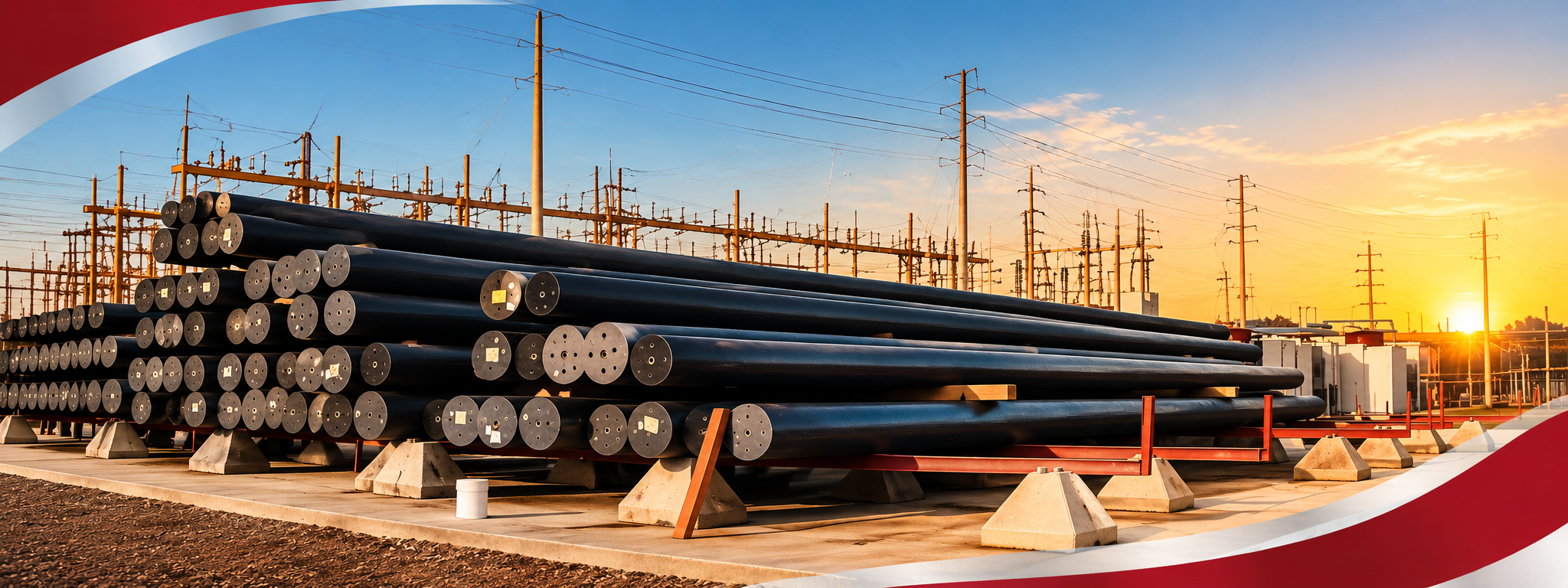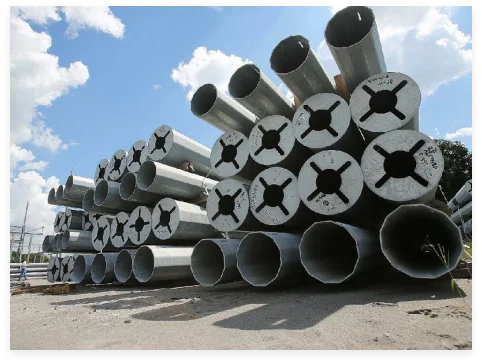
When a hurricane, tornado, or severe ice storm moves through a service territory, utility crews are not just racing against time. They are racing against a logistics problem that starts the moment the first pole comes down. Every hour of delay in replacing downed poles is another hour that homes, businesses, hospitals, and emergency services go without power. Emergency pole rack deployment is the operational strategy that compresses that delay – and for utility companies that have built it into their emergency preparedness framework, it is the difference between a community that gets power restored in hours and one that waits for days.
At CMS Utility Services, we have spent over 40 years helping utility companies build the infrastructure foundations that make rapid storm response possible. From purpose-built pole rack installation at service centers to full pole yard design and construction projects that position materials exactly where they are needed, our work exists to make sure utility crews never arrive at a disaster zone empty-handed.
The Problem That Emergency Pole Rack Deployment Solves
Utility poles are the connective tissue of the power distribution system. When a major weather event strikes, they are also among the most vulnerable components of that system. A single storm corridor can bring down hundreds of poles across miles of distribution lines, and the damage does not always follow predictable patterns. Poles fail in rural stretches far from service centers. They fail in areas accessible only by roads that are themselves blocked by storm debris. They fail in sequences that can disconnect entire communities from the grid in minutes.
The traditional response model had a structural weakness built in: materials were stored at central depots, and crews had to return to those depots between repairs. Every trip back added hours. In large-scale storm events, that model could not keep up with the scale of the damage, and restoration timelines stretched from hours into days. Emergency pole rack deployment addresses that weakness at its source by moving the supply chain forward, pre-positioning loaded pole racks inside the anticipated impact zone before the storm arrives.
The principle is straightforward: when utility crews arrive at a damaged location with poles already on-site and organized for immediate use, they spend their time on restoration work – not on depot runs. That single operational shift has a compounding effect across every repair in the sequence.
What Makes a Pole Rack System Deployment-Ready
Not all pole racks are designed for emergency field deployment. Permanent fixed racks cemented into a service yard floor are excellent for long-term organized storage, but they cannot be moved when the work needs to happen 50 miles away in a storm corridor. The equipment that enables genuine emergency pole rack deployment is portable, modular, and purpose-built for rapid setup under field conditions.
A deployment-ready pole rack system has several defining characteristics. It must be transportable by standard utility fleet vehicles without specialized rigging. It must be configurable on-site to accommodate poles of different lengths, diameters, and materials – wood, steel, and concrete – because storm damage rarely limits itself to one pole type. It must hold poles safely elevated above ground level, reducing handling time and minimizing the risk of injury during loading and unloading. And it must be able to be set up quickly by a small crew, ideally without the need for heavy equipment beyond what is already on-site.
CMS Utility Services engineers and manufactures pole rack systems built around exactly these requirements. Our portable pole racks are modular by design, allowing crews to configure the rack on-site to match the pole inventory they are working with. Customers like Shane Boren from Mt. Wheeler Power have described them as the most universal pole racks on the market – easy to assemble, easy to move, and built to work wherever the job takes them.
The Deployment Process: How It Works in Practice
A well-executed emergency deployment follows a sequence that has been refined through real-world storm response operations across the utility industry. Each phase is designed to eliminate the delays that separate a fast restoration from a slow one.
- Pre-storm staging: When a major storm is forecast, supply chain teams load portable pole racks with the pole inventory sized for the distribution infrastructure in the anticipated impact area. Loaded racks are transported to staging locations – substations, secure staging yards, or pre-identified lots – positioned inside the expected damage corridor. The goal is to have poles within short driving distance of any failure point before the storm makes landfall.
- Damage mapping: Once field conditions permit, damage assessors – engineers, aerial crews, or drone operators – map the extent and location of pole failures across the affected area. This assessment drives the dispatch of staged racks to specific work zones and establishes the prioritized restoration sequence.
- On-site deployment: Crews draw from the pre-staged rack supply at the work zone rather than returning to a distant depot. Poles are organized by specification and accessible immediately. Rack systems keep poles elevated and within reach, reducing handling time and the number of crew movements required for each installation.
- Sequential restoration: Utility companies follow a defined priority sequence – transmission infrastructure and substations first, then critical facilities, then broad residential and commercial circuits, then isolated remaining outages. Pre-staged racks at multiple points in the damage corridor allow repair teams to run these sequences in parallel, compressing the total restoration timeline across the entire service territory.
Why Pole Yard Design and Construction Sets the Foundation
The ability to deploy pole racks rapidly during an emergency does not begin on the day the storm forecast appears. It begins months or years earlier, when a utility company commits to building the physical infrastructure that makes pre-positioning possible. That is where pole yard design and construction becomes one of the most strategically important investments a utility can make.
A well-designed pole yard is not simply a place to store poles. It is a logistics platform. The layout determines how quickly crews can load vehicles, how efficiently different pole types can be sorted and accessed, and how much inventory can be staged and ready at any given time. CMS Utility Services approaches every pole yard design and construction project as an operational design challenge – working closely with utility teams to understand their service territory, storm exposure, fleet capabilities, and emergency response requirements before a single rack is placed.
This planning process determines how many racks are needed, where they should be positioned within the yard, how access lanes should be oriented for rapid loading, and what the workflow looks like when an emergency dispatch is triggered. A yard designed for emergency readiness operates fundamentally differently from one designed only for routine storage. The difference shows most clearly at 4 a.m. after a major storm, when a crew needs to load and depart in under an hour.
The Role of Professional Pole Rack Installation
Even the best-designed portable rack system performs only as well as its installation allows. Rack systems that are improperly set up in the field become safety hazards – poles can shift during handling, racks can become unstable on uneven ground, and improper assembly under time pressure can put crews at risk. Professional pole rack installation is not a luxury – it is a safety and operational requirement.
CMS Utility Services provides experienced installation crews who understand both the technical requirements of the rack system and the operational realities of emergency field conditions. Our pole rack installation process covers everything from initial site assessment and rack configuration through final load testing and crew orientation. Whether we are installing racks at a permanent service center or deploying a modular system to a temporary storm staging location, our teams work to the same standards and safety protocols.
This consistency matters. In an emergency deployment scenario, the crew using the rack at 2 a.m. in a storm corridor is often not the same team that set it up. The rack needs to behave predictably, load safely, and allow fast pole retrieval without requiring specialized knowledge. That level of reliability is built in during the installation phase – which is why cutting corners at setup creates problems when the pressure is highest.
Preparedness Is a Decision Made Before the Storm
Utility companies that handle major storm events effectively are not reacting on the day of landfall. They are executing plans that were designed, practiced, and built into infrastructure months or years earlier. Emergency pole rack deployment capability is not something that can be assembled in the hours before a storm. The racks must already exist. The staging protocols must already be defined. The crews must already know the system. The only thing left to do when the forecast appears is execute.
That preparedness begins with the right equipment, the right yard design, and the right installation practices. It continues with regular maintenance and pole rack refurbishment programs that ensure every rack in the fleet is field-ready when called upon. And it is supported by a supply chain partner who understands the urgency that utility operations demand – not just on paper, but in the way they design, manufacture, and deliver every system they provide.
CMS Utility Services exists to be that partner. From initial pole yard design and construction through pole rack installation and ongoing readiness support, we help utility companies build the infrastructure foundation that makes rapid storm response possible. When the next major storm hits your service territory, the question is not whether your community will need power restored quickly. It is whether your operations are built to deliver that restoration at the speed your community needs.